
Lead with clarity when every word carries weight.
Gov Comms Academy provides practical communications training for public safety and law enforcement leaders: police chiefs, sheriffs, fire chiefs, EMS directors, emergency management directors, 911 directors and their command staff, who must address employees, elected officials, journalists and the public during routine operations and high-stakes incidents.
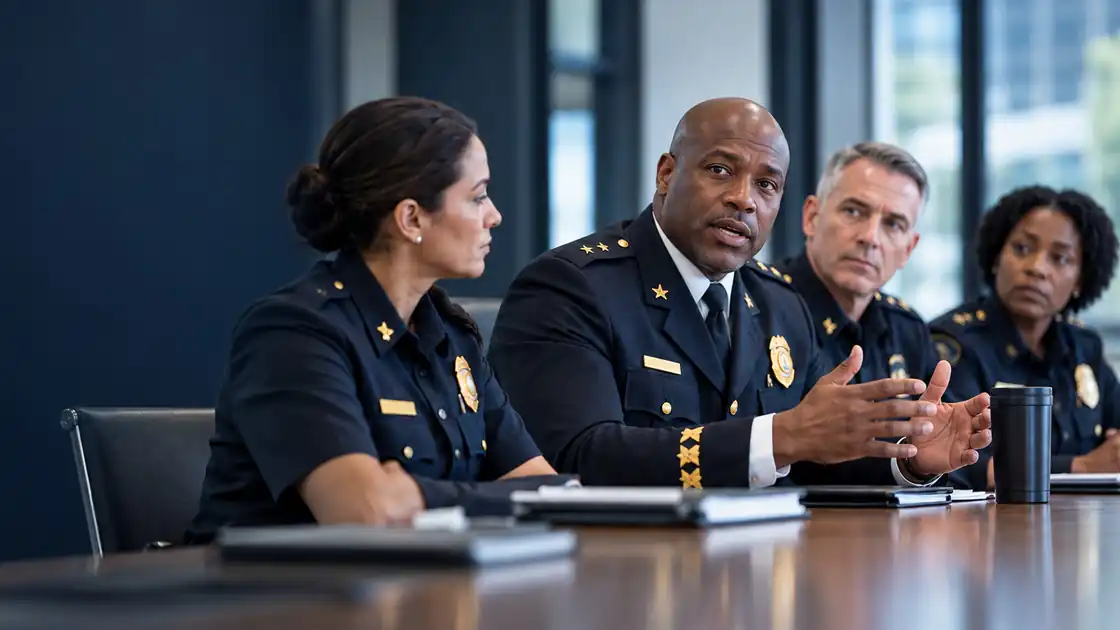
Built for:
- Police Chiefs & Sheriffs
- Fire Chiefs
- EMS Directors
- Emergency Managers
- 911 Directors
- Command Staff
One program for every public safety discipline.
Public safety leaders share the same public moments: the press conference, the council meeting, the first hour of an emergency. Training is built for the chiefs, directors and command staff who lead them across every discipline.
Law Enforcement
Police chiefs, sheriffs, assistant and deputy chiefs, majors, captains and command staff, including campus, transit and airport police leaders.
Fire and Rescue
Fire chiefs, deputy and assistant chiefs, battalion chiefs, fire marshals and fire rescue command staff.
Emergency Medical Services
EMS directors and chiefs, medical directors, operations chiefs and EMS supervisors.
Emergency Management
Emergency management directors, EOC managers, homeland security coordinators and recovery leaders.
911 and Emergency Communications
911 directors, emergency communications center managers and dispatch supervisors.
Public Safety Administration
Public safety directors, corrections and detention leaders, and the public information officers and civilian staff who support them.
Communication responsibilities unique to public safety leadership.
A public safety leader's words carry legal, operational and community weight. Training focuses on the moments chiefs, directors and command staff face most often, and the ones they can least afford to get wrong.
Executive Presence
Represent your agency with clarity, credibility and composure at the podium, in council and commission chambers and in the community.
Media Interviews
Stay accurate and on message, bridge to what the public needs to know and handle difficult or speculative questions.
Critical-Incident Communication
Lead the first hour of a shooting, major fire, mass-casualty event, severe weather or other emergency with a clear process: what you know, what you don't yet know and what happens next.
Press Conferences and Joint Briefings
Plan, rehearse and deliver briefings, including multi-agency and unified-command briefings, that inform the public and hold up under follow-up questions.
Internal and Employee Communication
Keep officers, firefighters, medics, telecommunicators and civilian staff informed, especially when the news reaches them before you do.
Community Trust and Public Accountability
Explain incident reviews, response times, budget decisions and after-action findings in ways that build understanding and credibility over time.
Recommended training pathways.
Practical, scenario-based learning designed for the real-world communication challenges public safety and law enforcement leaders face.
 01
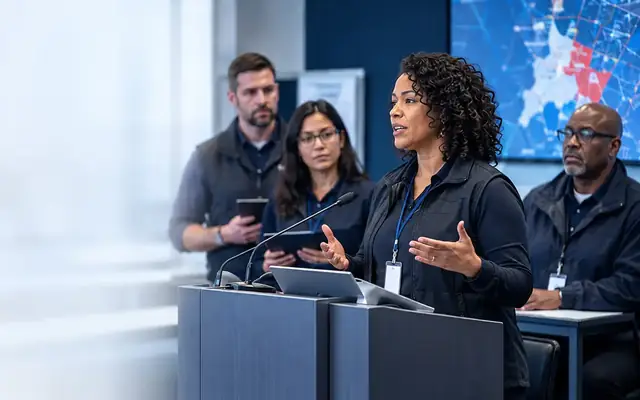
On the Record
Media Training for Public LeadersPrepare for interviews and press conferences, respond to difficult questions and practice on camera.View course outline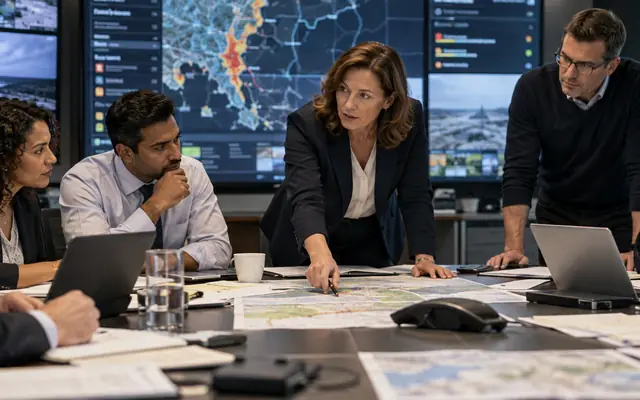 02
Ready When It Matters
Crisis Management & CommunicationCoordinate the first critical minutes of an incident and communicate with discipline when trust is at risk.View course outline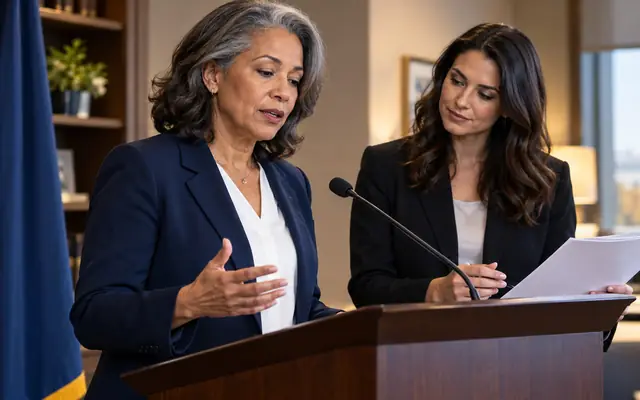 03
Speak With Authority
Public Speaking & Executive PresenceStrengthen executive presence for community meetings, council and commission briefings and public remarks.View course outline 04
Executive-Team Intensive
Private, customized preparationA customized, high-impact experience for your command team, or a joint group of police, fire, EMS and emergency management leaders, to align messaging and build readiness together.Request an intensivePrivate cohorts and executive-team intensives.
Train chiefs and directors individually, bring your full command staff together or convene police, fire, EMS, emergency management and 911 leaders for joint training. Every session is customized with scenarios that reflect your agency, your community and your approval process.
What's included
- Planning consultation with agency or department leadership
- Scenarios built around your agency's real pressures and incident types
- Coordination with your PIO, joint information center and communications staff
- On-camera simulations and individual coaching
- Delivered in person at your agency, training academy or emergency operations center
Frequently asked questions.
Who is public safety communication training for?
Chiefs, directors and command staff across public safety: police chiefs and sheriffs, fire chiefs, EMS directors, emergency management directors, 911 and emergency communications directors, and the public information officers and senior staff who support them.
Can police, fire, EMS and emergency management leaders train together?
Yes. Joint cohorts give leaders from different disciplines a shared approach to multi-agency briefings, unified command and joint information center communication, so the public hears one clear, consistent message.
How is this different from PIO training?
This program prepares the chiefs and directors who become the public face of an incident. Public information officer training prepares the communications professionals who support them. Many agencies train both together.
Where is the training delivered?
Private cohorts and executive-team intensives are delivered in person at your agency, training academy or emergency operations center, with scenarios customized to your community.
Prepare your public safety leaders before the next critical moment.
Tell us about your agency, command staff, priorities and timeframe. We respond within two business days.
Build Your Training Plan